


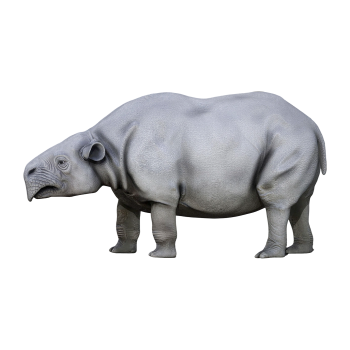
Arrow Tooth Beast (3D Animated Model)
Arrowtooth (scientific name: Toxodon) is an extinct mammal of the family Arrowtooth, southern hoofed, living in South America from the Pliocene to the Pleistocene. Adult individuals can reach 2.75-3 meters in length, shoulder height is about 1.5-1.8 meters, body size is similar to rhinoceros, with thick skull and short neck characteristics, skull length accounts for about 1/3 of body length, eye socket is small and vision is weak, limb bones are thick and foot has three toe hook structure. Its inciror and molars can grow for life, with high crowns and shovel-shaped anterior projections of the lower inciror, similar to rodents in tooth structure, adapted to grind and feed on grassland plants.

Trilobite fossil
Trilobes are arthropods of the phylum Arthropoda trilobes. The body is divided into three parts: head, chest and abdomen. There is a carapace on the back, and the carapace is divided into three longitudinal parts. The head is covered with a hard shell, called the cephalic nail; the central raised part of the cephalic nail is called the head saddle, and the shape and size of the head saddle vary greatly according to the type; the front of the head saddle is the head cap with eyes on it; the abdomen and tail are also wrapped in carapace. It is named for the longitudinal division of the carapace on the back into three pieces.

Cretaceous chrysanthemum fossils
The ammonites are an extinct marine mollusk belonging to the cephalopod family. They lived on Earth during the Mesozoic period, about 0.25 billion to 65 million years ago, and were mainly distributed in the oceans. The shape of the ammonite resembles a spiral flat disc, consisting of a series of spiral chambers. Their shells are usually made of calcareous matter and can be preserved as fossils. The size range of ammonites is large, from tiny species with only a few millimeters to giant species with a diameter of more than 2 meters.

Fossilized Tooth of Hornosaurus
Caueratosaurus is also translated as Cryptocoratosaurus, which means "face with slender horns" in Greek. Like all the lower order dinosaurs, the hornophorosaurus was a herbivorous dinosaur. During the Cretaceous period, flowering plants spread across the continent, and Coriolus probably fed on dominant flowering plants, as well as ferns, cycads, and coniferous plants. Coriatops may have used their sharp beak-like beaks to bite off leaves or needles. The fiber-hornosaurus is 2 meters long and may weigh between 68kg and 200kg.

Fossil teeth of Triceratops
Triceratops, a herbivorous dinosaur of the genus Triceratops, is a bird-buttock hornosaurus. Triceratops is a kind of dinosaur like rhinoceros. It has heavy appearance, thick legs, three horns on its head, a large bone plate extending backward at the back of its skull to form a neck shield, a short horn above its beak and two long horns above its orbit. Triceratops horns are defensive weapons and can scare off predators. Its tail is short and sharp, and its feet are like hooves.

Primitive bird fossils

Fossil of Trilobite with Round Shield
The round shield trilobite lived during the Devonian period and was mainly distributed in Morocco. The round shield trilobite is known for its unique appearance, with slender eye stalks, prominent spines, and a round, uneven head.

Former Bavarian terror elephant skeleton
The Bavarian terror elephant is an extinct long nosed animal belonging to the Deinoteridae family. It lived during the Early Miocene and Middle Miocene periods and was distributed in Africa, Europe, and Asia. The body size of this animal is similar to modern Asian elephants, with a shoulder height of about 2.7 meters. Unlike modern elephants, the Bavarian terror elephant does not have long upper teeth, but instead has a pair of downward curved lower teeth. These long teeth may be used to grab food or move tree branches.

Gastropod shell fossils
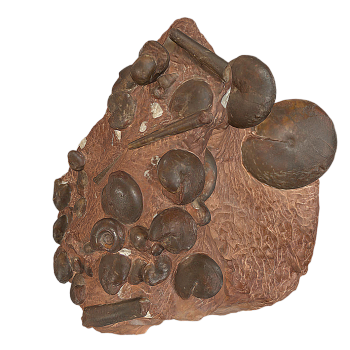
ammonite fossil
Kikushi, a collective term for cephalopods and ammonites in the phylum Mollusca, is a group of extinct marine organisms. Kikushi lived from the early Devonian to the late Cretaceous period, and its shell is often preserved in the form of fossils in the strata. The outer shell of ammonite is a single petal, consisting of three parts: the fetal shell, the gas shell, and the living room. It usually spirals around the fetal shell along a plane, with each revolution forming a spiral ring. Adult ammonite shells generally have 5 to 9 spiral rings, symmetrical on both sides, and can be straight, curved, or even irregular.
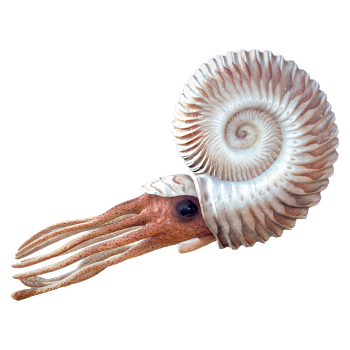
Ancient Kikushi (3D Restoration Animation)
Kikushi, a collective term for cephalopods and ammonites in the phylum Mollusca, is a group of extinct marine organisms. Kikushi lived from the early Devonian to the late Cretaceous period, and its shell is often preserved in the form of fossils in the strata. The outer shell of ammonite is a single petal, consisting of three parts: the fetal shell, the gas shell, and the living room. It usually spirals around the fetal shell along a plane, with each revolution forming a spiral ring. Adult ammonite shells generally have 5 to 9 spiral rings, symmetrical on both sides, and can be straight, curved, or even irregular.
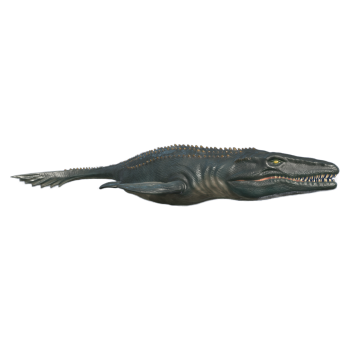
Canglong (3D Restoration Animation)
Canglong is a marine reptile belonging to the family Canglong in the order Scales. Its largest individual can reach about 20 meters, with a long barrel shaped body, a strong tail, and a snake like appearance. It has high fluid dynamics; Teeth are curved, sharp, and conical in shape; The forelimbs of Canglong have five toes, while the hind limbs have four toes. The limbs have evolved into fin like limbs, with the forelimbs being larger than the hind limbs.

Mosasaurus
Mosasaurus is a marine reptile belonging to the family Mosasaurus in the order Scales. Its largest individual can reach about 20 meters, with a long barrel shaped body, a strong tail, and a snake like appearance. It has high fluid dynamics; Teeth are curved, sharp, and conical in shape; The forelimbs of Canglong have five toes, while the hind limbs have four toes. The limbs have evolved into fin like limbs, with the forelimbs being larger than the hind limbs. Most of the time, they swim slowly in the waters near the coast, with a fierce temperament that preys on fish, ammonites, turtles, and possibly other small sauropods. He is a ferocious ocean hunter.

a cockroach
Cockroaches generally refer to insects belonging to the "cockroach" (scientific name), belonging to the arthropod, insects, cockroaches (Blattaria), commonly known as cockroaches, are common medical insects. Among them, only about dozens of species will invade human homes, and there are several species that are kept by humans as pets and as food for pets. Most of the species can only be seen in wild mountain streams and forests or insect museums. The most common cockroach at home, the big one is about 5.0cm long.
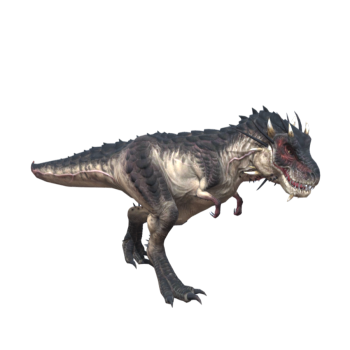
Realistic Tyrannosaurus Rex 3D Model

Meraxes Gigas Jurassic Dinosaur 3D Model
Paleontologists have described a new species of giant carnivorous dinosaur from a fairly complete skeleton in Patagonia, Argentina. The discovery could help shed light on the mystery of why such powerful predators have almost comical little arms. The new species, named Meraxes gigas, weighs more than 4 tons, is nearly 11 meters long and has a huge skull with a length of 1.3 meters.
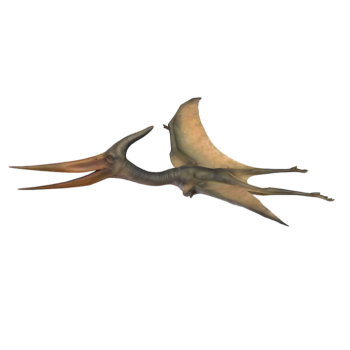
Jurassic toothless pterosaur 3D model

Jurassic Giant Dinosaur Brachiosaurus 3D Model
Brachiosaurus is a general term for the "Brachiosaurus" dinosaurs of the Jurassic period. The body length is 25 meters, the height is 15 meters, the weight is 30 tons, the tail is thick and short, the head is very small, the neck is very long, and the shape is similar to that of a giraffe. There are large claws on the inner side of the foreleg. The jaw is well developed, covered with 52 teeth up and down, and the edges of the teeth are sharp. The limbs are thick and strong. The nostrils are on top of the head. It is named for its long forelimbs.

Popular Models
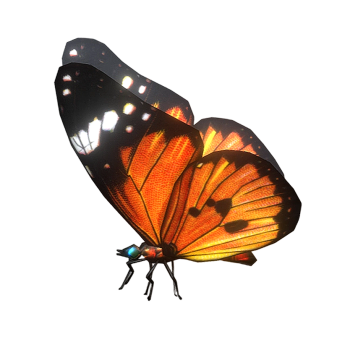
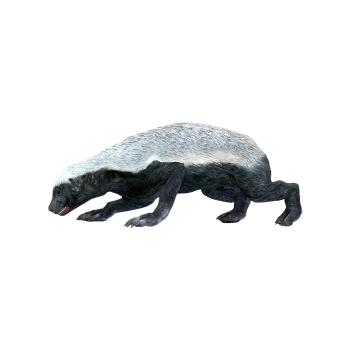
Honey Badger (3D animated model)
192 View
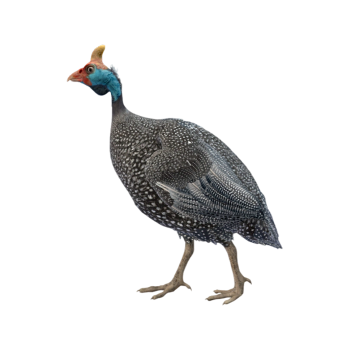
Guinea fowl (3D animated model)
163 View
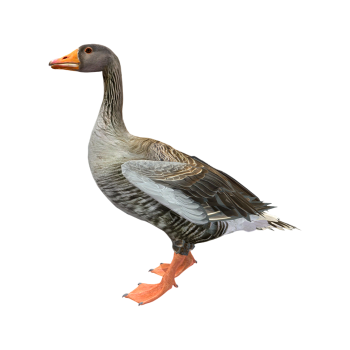
Wild Goose (3D animated model)
185 View
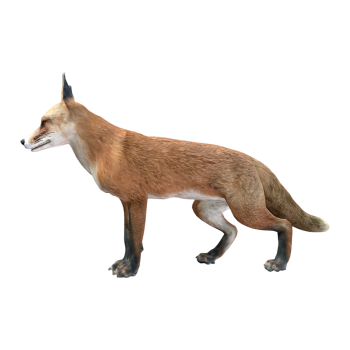
Red Fox (3D animated model)
153 View
Random Model

Bust of Johann Wolfgang von Goethe
881 View
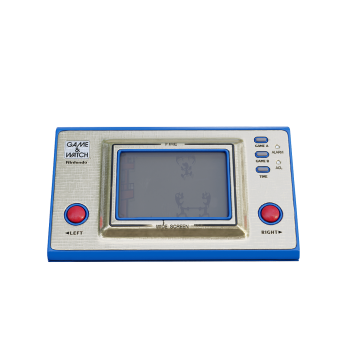
Nintendo Game & Watch Portable
873 View


Black Rhinoceros
1406 View


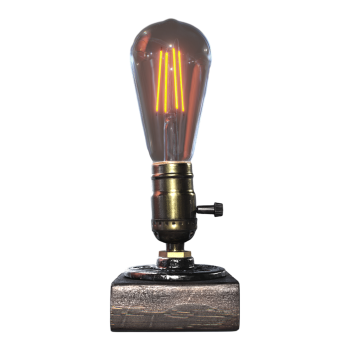
19th century retro Edison lamp
935 View

New York Yankees baseball cap
914 View